
How to Pack Fragile Items for Moving: TV, Fridge, Crockery and Appliances
Learn how to pack fragile items for moving, including televisions, glassware, mirrors, refrigerators, washing machines and electronics.
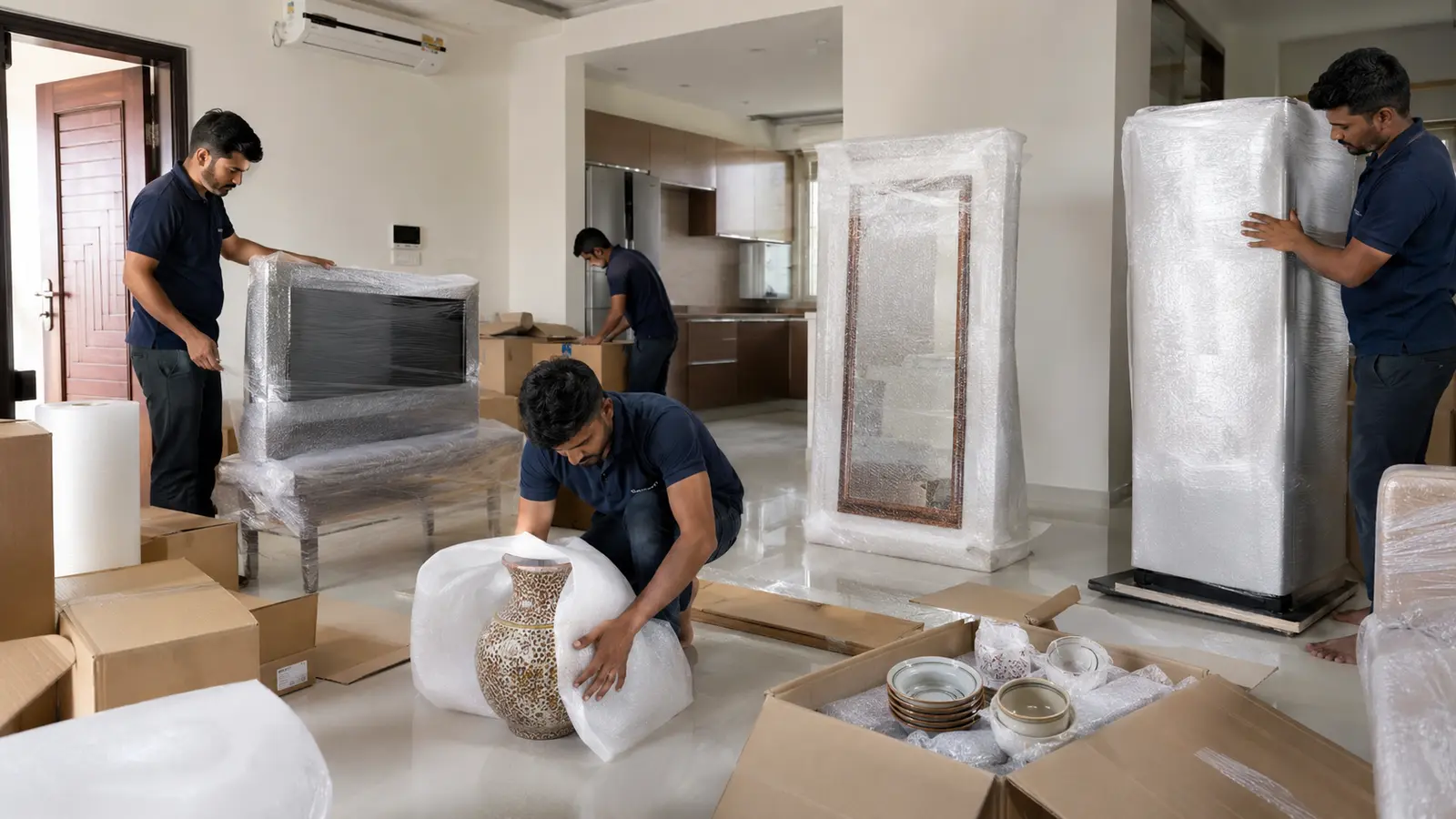
Learning how to pack fragile items for moving begins with matching the protection to the item. Strong cartons, internal cushioning, edge protection, sensible weight distribution and clear handling instructions reduce avoidable movement and impact.
Appliances also need preparation before wrapping. Always follow the manufacturer's instructions for disconnecting, draining, defrosting, transporting and reconnecting a specific model.
How to Pack Fragile Items for Moving: Basic Principles
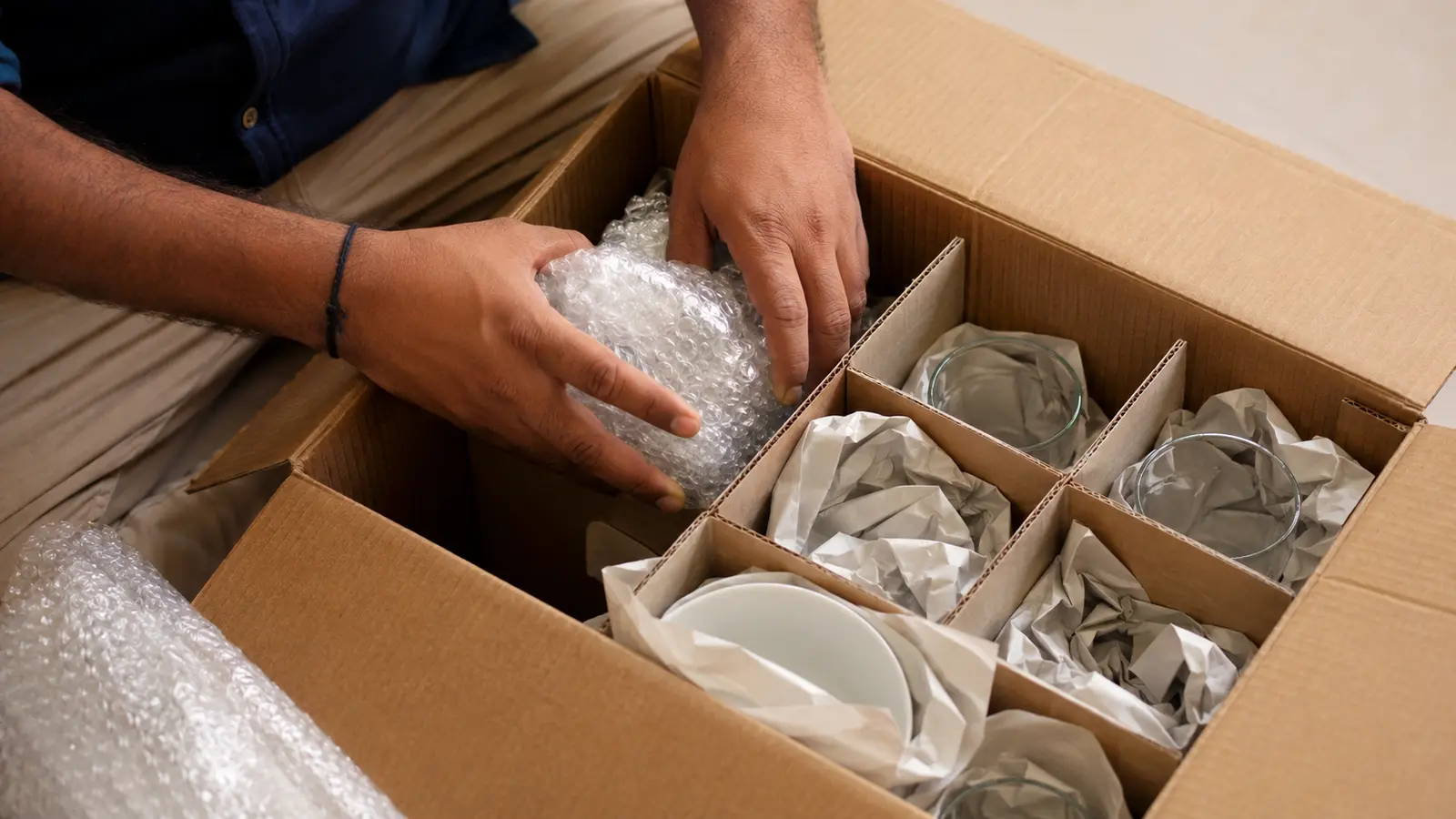
Use cartons that are strong enough for the contents. Cushion the base, wrap pieces individually where required, prevent empty spaces and keep the carton at a manageable weight.
- Do not mix very heavy items with delicate pieces
- Fill voids so contents cannot shift inside the carton
- Place heavier pieces at the bottom and lighter pieces above
- Keep boxes dry and close every seam securely
- Label the destination room and fragile handling requirement
- Never place valuables or original documents in general cartons
Television and Monitor Packing
Use the original box and fitted inserts when they remain in good condition. Otherwise, protect the screen without applying pressure, cover the corners and place the television upright in a suitable rigid package. Remove stands and detachable accessories when the manufacturer permits.
- Photograph cable connections before disconnecting
- Pack remotes, stands and cables in a labelled accessory bag
- Do not place objects against the screen
- Keep the television upright during handling and transport
- Avoid laying heavy cartons on top of the package
Glassware, Crockery and Kitchen Items
Wrap each glass or cup separately and use divided cartons when available. Plates are generally safer when placed vertically with cushioning between them instead of stacked flat under heavy weight.
| Item | Recommended preparation | Common mistake |
|---|---|---|
| Glasses and cups | Individual wrapping and divided spaces | Leaving pieces loose together |
| Plates | Vertical placement with cushioning | Heavy flat stacks without padding |
| Mirrors and frames | Corner and face protection, upright handling | Pressure on the centre surface |
| Electronics | Accessories removed and labelled | Loose cables scratching the device |
| Decor pieces | Individual wrapping and void filling | Mixing with heavy household items |
Mirrors, Frames and Decorative Pieces
Protect the face, corners and edges, then keep the item upright in a rigid outer package suited to its size. Large mirrors and glass-topped furniture may need professional handling and should be disclosed during the survey.
Prepare Refrigerators and Washing Machines
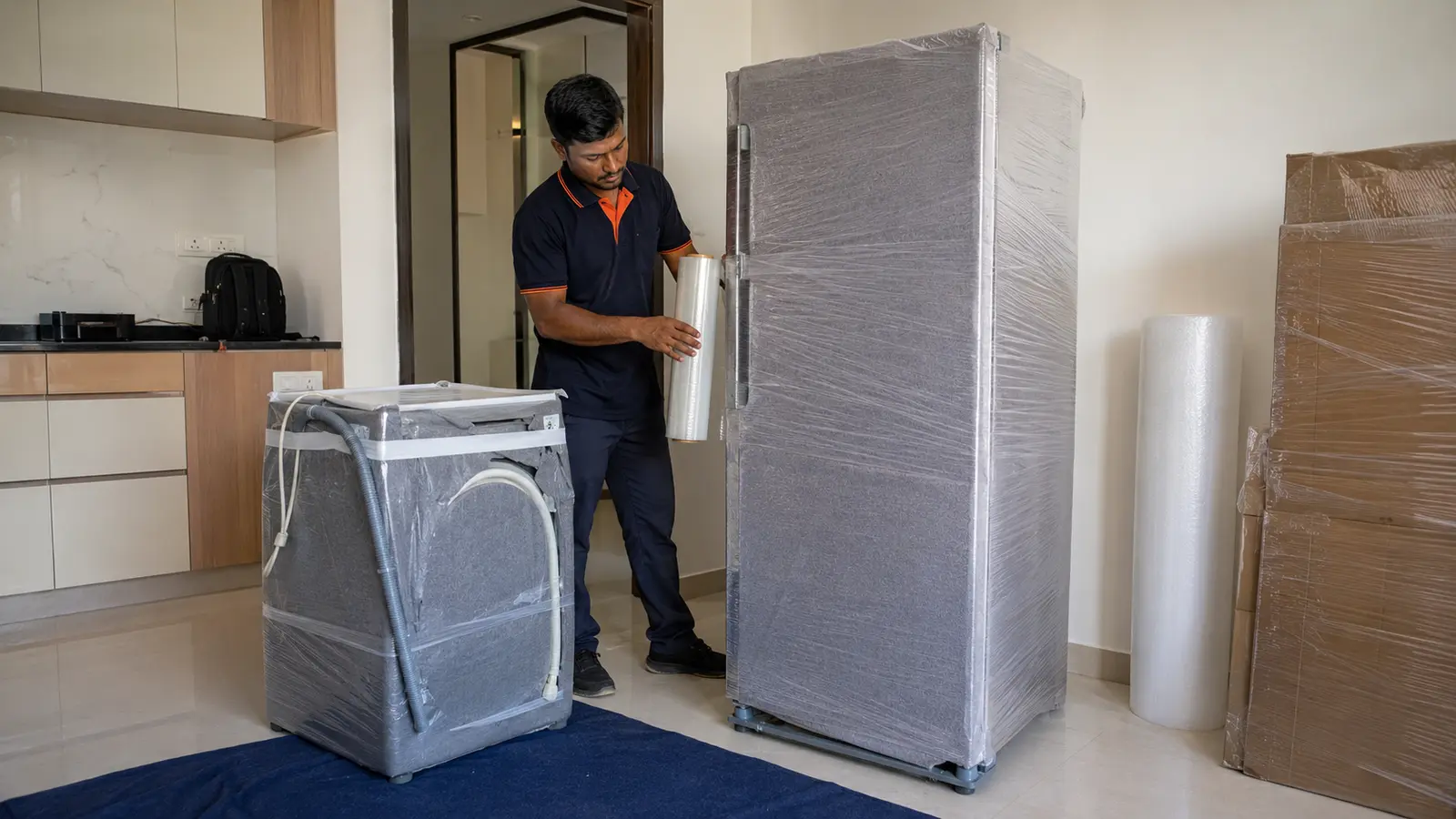
Empty, clean and dry appliances before moving. Defrost a refrigerator according to the manufacturer's instructions and secure loose shelves separately. A washing machine should be disconnected, drained and prepared using the model's transport guidance.
- Use a qualified person when safe disconnection requires one
- Do not leave water inside hoses or drums
- Secure cables and hoses without bending them sharply
- Use model-specific transit bolts where required and available
- Keep appliances upright unless the manufacturer explicitly permits otherwise
- Wait the manufacturer-recommended period before reconnecting a refrigerator
Computers, Routers and Small Electronics
Back up important data before the move. Remove detachable accessories, label cables and use anti-static protection where appropriate. Keep work devices and critical storage media with you when possible.
- Photograph the setup and ports
- Shut devices down fully before disconnecting
- Use fitted protection or a correctly sized carton
- Keep moisture away from electronics
- Do not use loose metal objects inside the same carton
Common Packing Mistakes to Avoid
- Using weak or previously water-damaged cartons
- Overloading cartons until the base or handles fail
- Leaving empty space around delicate contents
- Using only a thin outer wrap for a vulnerable screen
- Packing appliances before cleaning and drying them
- Failing to disclose fragile or unusually heavy items
- Discarding original packaging before the move is complete
How to Pack Fragile Items for Moving Without Overloading Cartons
Keep every carton at a manageable weight and distribute heavy pieces across multiple boxes. A strong carton can still fail when it is overloaded or carried by unsupported flaps.
When Professional Packing Is the Better Choice
Professional packing is useful for large televisions, mirrors, extensive crockery, multiple appliances or a home with many delicate items. Show these items during the survey so the mover can plan material, labour and vehicle space.
Explore SafeMove packing and local shifting services · Follow the complete home shifting checklist
Protect Fragile Belongings with a Clear Plan
The practical answer to how to pack fragile items for moving is to prepare appliances correctly, use item-appropriate protection, prevent internal movement and communicate special handling needs before moving day.
SafeMove provides full or partial packing for local moves within Hyderabad and Secunderabad. Share clear photos or use a WhatsApp video survey to show delicate items before requesting a written estimate.
Frequently Asked Questions
What is the best material for packing fragile items?
The right combination depends on the item. Strong cartons, suitable cushioning, edge protection and void filling are common requirements.
Should a television be transported flat?
Televisions are generally handled upright, but always follow the manufacturer's model-specific guidance and original packaging instructions.
How should plates be placed in a carton?
Plates are commonly wrapped individually and placed vertically with cushioning, inside a strong carton that is not overloaded.
When should I defrost my refrigerator?
Follow the manufacturer's instructions for your model and allow enough time to empty, defrost, clean and dry it before the move.
Do washing machines need transit bolts?
Some models require transport or transit bolts. Check the manual or ask an authorised technician rather than improvising.
Can SafeMove pack only fragile items?
SafeMove offers full or partial packing for local Hyderabad and Secunderabad moves, subject to the inventory and agreed scope.
Planning a Local Move in Hyderabad?
Share your pickup and destination, floor and lift details, approximate inventory and preferred date. SafeMove can confirm local service availability and whether a video survey is useful.